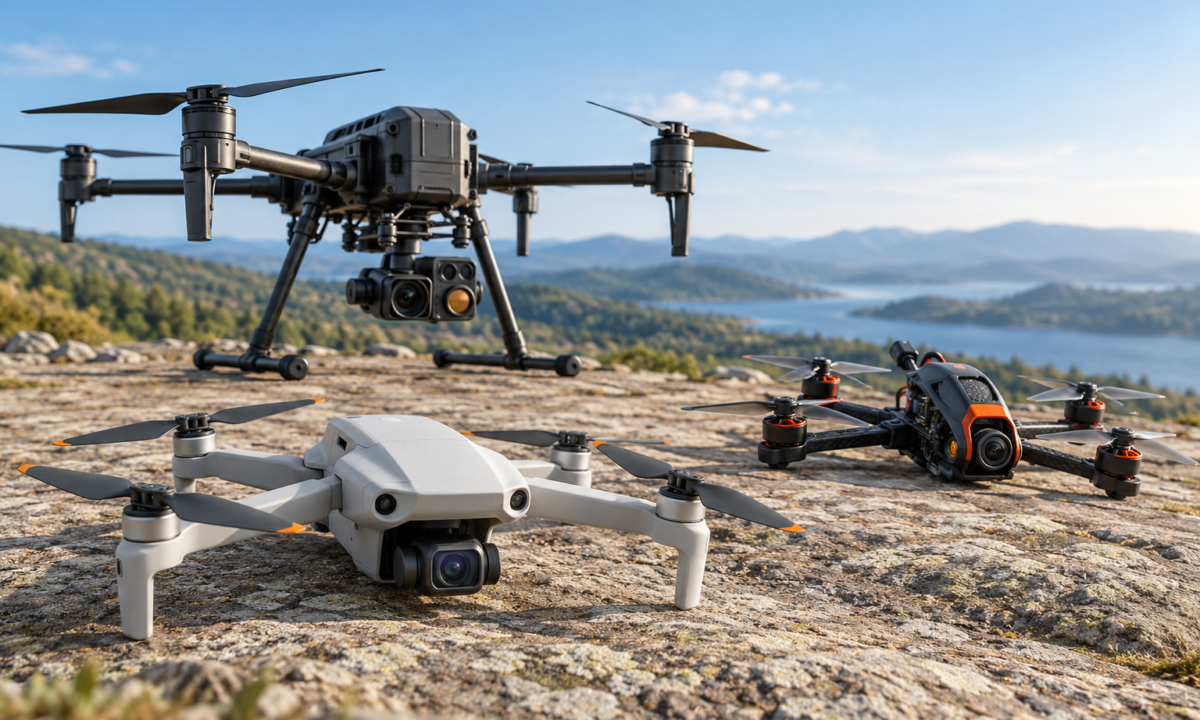
The best drone depends on the job. A lightweight camera drone is ideal for travel, an FPV drone is built for immersive flight, and an enterprise platform may matter more for inspection tools than for a low sticker price. These are five drones worth considering in 2026, organized by the use case they serve best.
How we selected these: This is an editorial comparison based on manufacturer specifications and intended uses, not hands-on testing. Availability, pricing, and regulatory requirements vary by location.
| Drone | Best for | Why it stands out |
|---|---|---|
| DJI Mavic 4 Pro | Professional photography and video | Large Hasselblad camera plus telephoto options |
| DJI Mini 4 Pro | Travel and lightweight aerial photography | Under-249-gram design with strong imaging and sensing |
| DJI Flip | Creators and beginners | Compact design, protected propellers, and automated shooting modes |
| DJI Avata 2 | FPV flight | Wide field of view and an immersive first-person flight experience |
| DJI Matrice 4T | Commercial inspection and public-safety work | Enterprise payloads, long endurance, and thermal capability |
1. DJI Mavic 4 Pro: best overall camera drone
The DJI Mavic 4 Pro is the strongest all-around choice for photographers, filmmakers, and agencies that want a serious camera platform without moving to a much larger aircraft. Its camera system combines a 4/3 Hasselblad sensor with medium-tele and tele cameras, giving operators more options than a single wide-angle lens. DJI lists up to 51 minutes of maximum flight time, 6K video from the Hasselblad camera, and omnidirectional sensing supplemented by forward-facing LiDAR.
Choose the Mavic 4 Pro when image quality, lens flexibility, and stabilized video matter more than minimizing size or cost. It is overkill for casual weekend flights, and buyers should budget for spare batteries, storage, and insurance as well as the aircraft.
Check the official DJI Mavic 4 Pro specifications.
2. DJI Mini 4 Pro: best lightweight travel drone
The DJI Mini 4 Pro remains one of the easiest recommendations for travelers who want capable aerial photos without carrying a large aircraft. DJI lists a weight under 249 grams, a 1/1.3-inch camera sensor, 48-megapixel stills, 4K video at up to 100 frames per second, and omnidirectional obstacle sensing.
Its small size makes packing and launching simpler, but the weight does not remove every legal obligation. Registration, remote-identification, airspace, and operating rules vary by country and by the way the drone is flown. Read our guide to checking drone laws before international flights before traveling.
Check the official DJI Mini 4 Pro specifications.
3. DJI Flip: best for creators and beginners
The DJI Flip is aimed at people who want polished social video without learning a complicated manual workflow first. Its sub-249-gram design, built-in propeller protection, 1/1.3-inch sensor, 48-megapixel photos, 4K video at up to 100 frames per second, and three-axis gimbal make it a practical bridge between a phone and a traditional camera drone.
It is a good fit for travel creators, family videographers, and first-time pilots who value quick takeoffs and automated subject shots. More advanced pilots may prefer the Mavic 4 Pro for lens choice and low-light work, while operators who specifically want goggles and manual FPV control should look at the Avata 2 instead.
Check the official DJI Flip specifications.
4. DJI Avata 2: best FPV drone
The DJI Avata 2 is the specialist choice for pilots who want the sensation of flying through the scene rather than the conventional stabilized-camera experience. DJI lists an aircraft weight of about 377 grams, a 1/1.3-inch sensor, a 155-degree field of view, and 4K video capability. The protected ducted design is suited to close-proximity creative flying, but FPV operations require more practice and more attention to the flight environment.
Buy the Avata 2 for dynamic fly-throughs, action footage, and immersive practice. It is not the best default choice for a beginner who only wants an easy point-and-shoot camera, and it should not be flown near people or obstacles simply because the propellers are enclosed.
Check the official DJI Avata 2 specifications.
5. DJI Matrice 4T: best enterprise inspection drone
The Matrice 4T belongs in a different category from the consumer drones above. It is built for professional teams conducting inspection, mapping, emergency-response, and public-safety work. DJI lists a standard takeoff weight of approximately 1,219 grams with standard propellers, a maximum takeoff weight of 1,420 grams in that configuration, and a maximum payload of 200 grams. Its 49-minute maximum flight-time figure was measured without wind or payload under specified test conditions; actual time varies. The 4T configuration adds enterprise imaging tools, including thermal capability, for work where detecting heat or documenting infrastructure matters.
Choose the Matrice 4T only when the mission justifies an enterprise platform, trained operators, documentation, and a larger operating budget. For a business that only needs occasional aerial photos, hiring a qualified provider may be more economical; see our guide to choosing a commercial drone service provider.
Check the official DJI Matrice 4 Series specifications.
What to check before buying
- Mission: Decide whether you need photography, FPV, mapping, inspection, or simply a compact camera.
- Weight and rules: A sub-249-gram aircraft can simplify some requirements, but it is not a universal exemption. Check the rules where you will actually fly.
- Sensing and flight environment: Obstacle sensing helps, but it does not make a drone collision-proof or safe in every lighting condition.
- Data and connectivity: Review the controller, app, storage, firmware, and any organizational privacy or security requirements.
- Total cost: Include batteries, chargers, memory cards, repairs, insurance, training, and required registration or remote-identification equipment.
Bottom line
For most serious camera work, the Mavic 4 Pro is the most capable choice in this group. The Mini 4 Pro is the better travel compromise, the Flip is the friendliest creator option, the Avata 2 is the specialist FPV pick, and the Matrice 4T is for organizations with a real inspection or public-safety mission. Compare the job first, then the aircraft.