
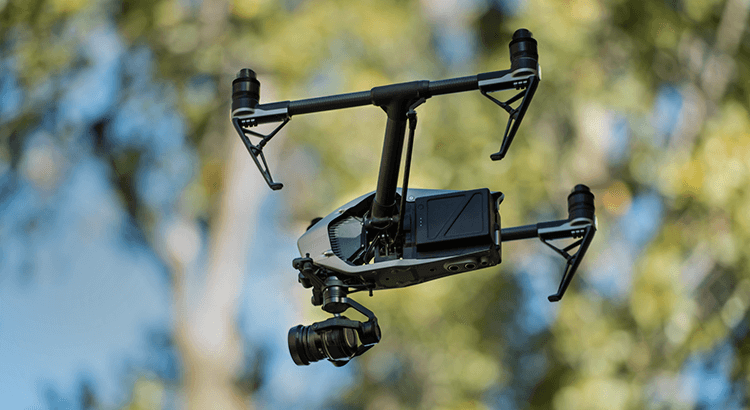
Zipline’s delivery drones use onboard acoustic microphones instead of cameras or radar to detect nearby aircraft, analyzing sound to estimate another aircraft’s position in three-dimensional space — similar to how a bat uses echolocation. The system provides 360-degree awareness with a detection range up to 2,000 meters (about 2 miles).
Why build obstacle detection around sound instead of vision?
Zipline’s system uses small, lightweight acoustic microphones and onboard processors rather than cameras or radar. That matters for a long-range delivery drone specifically. Acoustic sensors are lighter and less bulky than visual sensor arrays or radar hardware, which matters when every gram of weight competes with payload capacity and flight range on a small aircraft.
How does it actually detect another aircraft?
The system analyzes audio signals picked up by multiple acoustic sensors positioned around the drone, using the differences between what each sensor hears to estimate the direction and position of an approaching aircraft. It’s the same basic principle bats use for echolocation, applied to passively listening for engine and rotor noise rather than emitting sound and listening for the echo.
What’s the actual detection range?
Up to 2,000 meters, or roughly 2 miles, with 360-degree coverage around the aircraft. That’s enough distance to give the drone’s flight computer time to calculate and execute an avoidance maneuver before a real conflict develops, even against another aircraft closing at meaningful speed.
Why does this matter for scaling delivery drone operations?
Real-time autonomous detect-and-avoid is one of the core technical requirements regulators want satisfied before approving large-scale BVLOS delivery operations. An aircraft flying beyond an operator’s direct line of sight needs to be able to see and avoid other traffic on its own. A lightweight, low-power system like this is part of what let Zipline get approved to fly without ground observers, a meaningful regulatory milestone for autonomous delivery at scale.
For the aircraft this system flies on, see our Zipline P2 Zip database entry.
Sources: The Drone Girl, FLYING Magazine.