
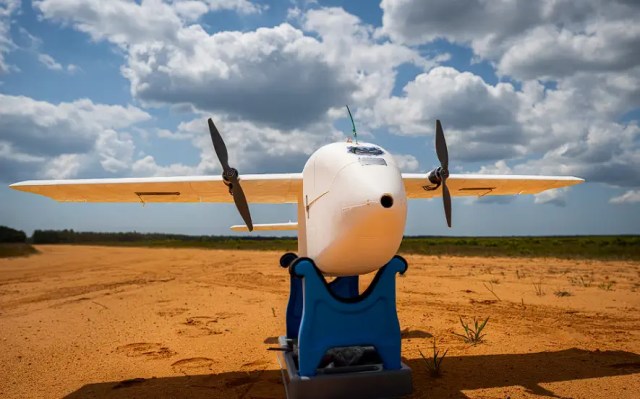
Air Force researchers designed, built, and successfully flew an autonomous aircraft in less than 24 hours. The achievement was reported in mid-July 2026. The project traces back to 2024. A three-person team began evaluating how to rapidly adapt small unmanned aircraft systems, their technology, and their payloads to specific mission needs.
What did the Air Force actually accomplish?
Researchers took an aircraft from design through build to a successful autonomous flight in under 24 hours. That’s not a proof-of-concept sketch. It’s a working aircraft that flew, on a timeline usually reserved for incremental testing, not full development.
Where did this capability come from?
It traces back to 2024. A three-person team began evaluating how to rapidly adapt small UAS platforms, technology, and payloads based on specific mission needs. That early work built the foundation for the rapid design-build-fly capability demonstrated in 2026.
Why does 24-hour aircraft development matter for the Air Force?
Military needs shift fast. A mission-specific aircraft that takes months to develop is often obsolete by the time it’s ready. A team that can design, build, and fly a new airframe in a day can adapt almost as fast as the need itself appears. That’s the practical value of rapid prototyping applied to actual flight hardware, not just software.
Who actually built it?
The team was Black Phoenix, part of the Air Force’s Blue Horizons fellowship at the Air Force Center for Strategy and Technology, based at Eglin Air Force Base in Florida. Members included Col. Dustin Thomas, Lt. Col. Jordan Atkins, and Lt. Col. Peter Dyrud. Blue Horizons is described as part think-tank, part incubator, built to let officers run self-directed technology exercises like this one. It’s a fellowship program, not a formal acquisition effort, so the 24-hour build doesn’t tie into a named program of record like Rapid Dragon or the Collaborative Combat Aircraft initiative.
Sources: U.S. Air Force.