Drone payload capacity is the amount an aircraft can carry within its manufacturer’s approved operating limits. A useful payload plan accounts for the weight of the complete equipment setup and its effect on flight performance—not just the advertised capacity of the aircraft.
What counts toward a drone payload?
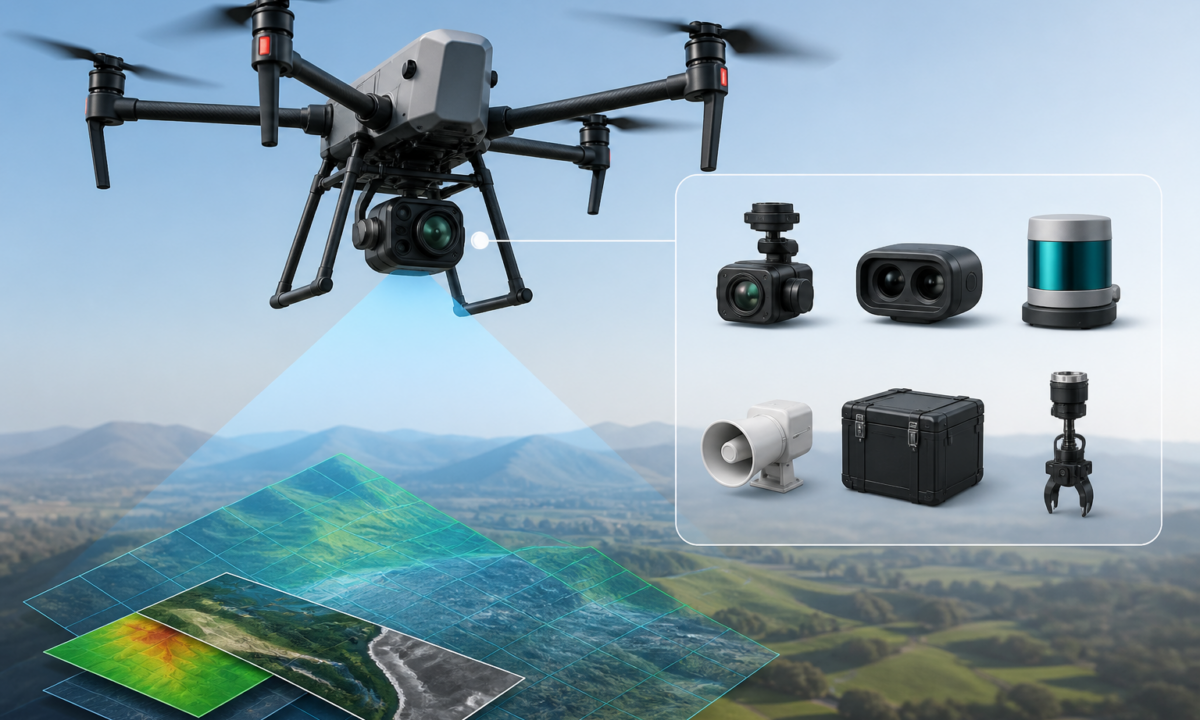
Depending on the aircraft and manufacturer’s definition, payload may include a camera, sensor, cargo or other carried equipment, together with mounts, cables and accessories. Consult the aircraft’s manual for how its limits are specified; do not assume two manufacturers calculate payload the same way.
Why does payload weight matter?
Additional weight can affect endurance and aircraft handling. The actual effect depends on the aircraft, payload configuration, weather and flight profile. Manufacturer maximum flight times are usually measured under specific test conditions and should not be treated as guaranteed flight time with a payload.
How do operators check payload fit?
- Confirm the aircraft and mount are designed for the equipment.
- Use the manufacturer’s published limits for the complete configuration.
- Check balance, mounting, power and any operating restrictions in the manual.
- Plan conservatively for environmental conditions and check the aircraft before flight.
For examples of civilian sensors and their uses, see our drone payloads overview. When hiring a team, ask how its aircraft and sensor choice fit your deliverable in the commercial provider selection guide.