
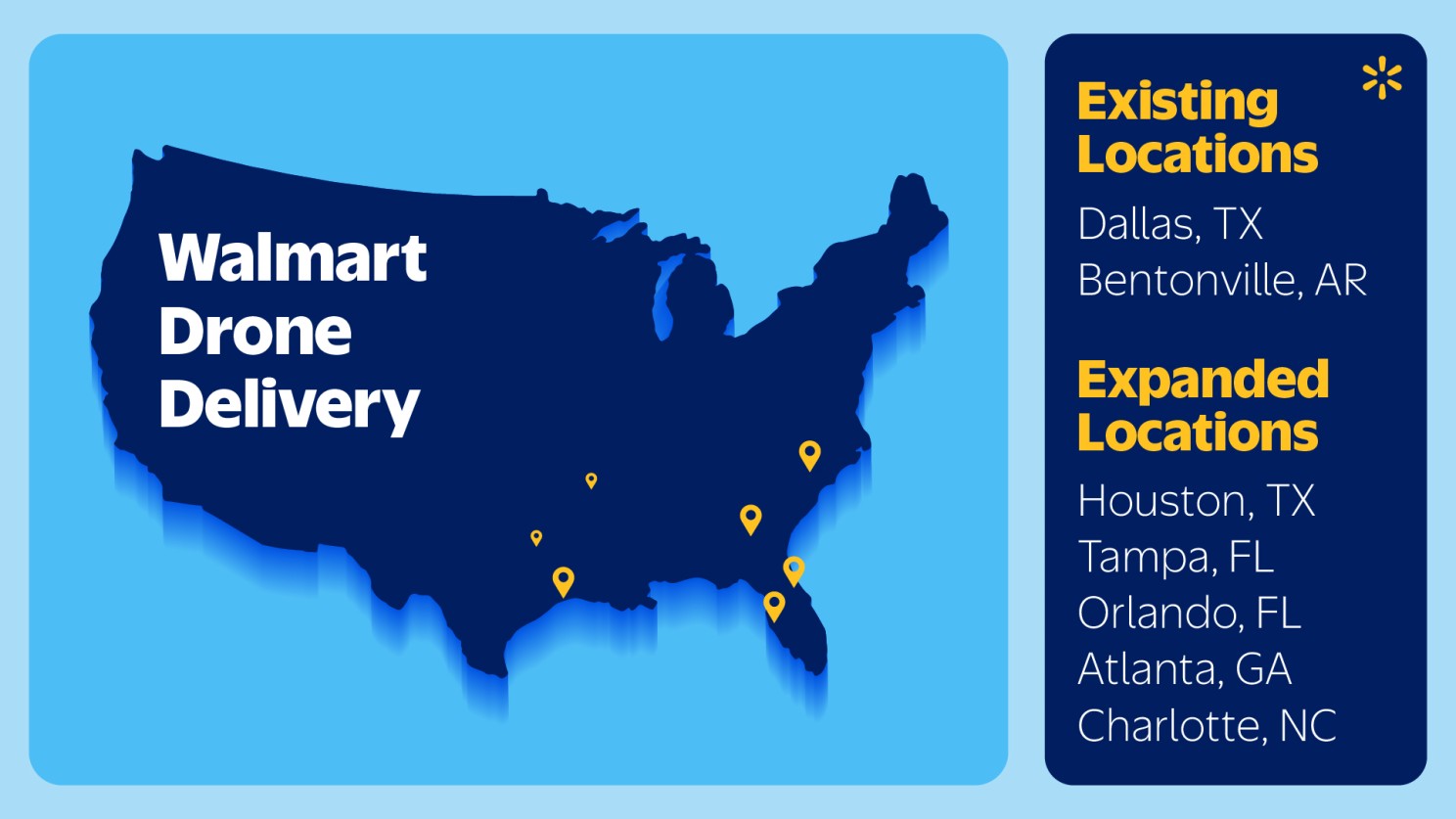
Wing, Alphabet’s drone delivery unit, is expanding its Walmart partnership to 150 additional stores through 2026 and into 2027. That brings the total footprint to more than 270 Walmart locations. Wing says the expanded network reaches roughly 10% of the US population, or more than 40 million Americans. Drones cruise up to 60 mph and typically complete a delivery in under 30 minutes.
How did this partnership start?
Wing and Walmart began in 2023 with a pilot at two Dallas-area stores, covering about 60,000 homes. The service expanded in mid-2025 to Houston, Orlando, Tampa, and Charlotte. Houston went live on January 15, 2026. The current expansion adds Memphis, New Orleans, Philadelphia, Phoenix, San Diego, the San Francisco Bay Area, Salt Lake City, Los Angeles, St. Louis, Cincinnati, and Miami.
How does the delivery actually work?
Wing’s drones don’t land. They hover and lower packages by tethered winch. Cruise speed is up to 60 mph. Walmart says typical fulfillment runs 19 to 30 minutes from order to doorstep. Wing recently began flying a larger aircraft capable of carrying a 5-pound payload. That expands what it can deliver beyond small convenience items.
How much has Wing actually delivered?
Wing has passed 1 million cumulative deliveries across its markets. The company says its most active customers, the top 25%, order about three times a week. Walmart describes this as the largest drone-delivery footprint of any US retailer. Exact delivery volumes for each individual city aren’t broken out publicly.
Who’s Wing actually competing with?
Walmart’s original Florida drone partner wasn’t Wing. It was DroneUp, which launched in Orlando and Tampa back in 2022. DroneUp reportedly spent around $30 to fly a package customers got for free, closed 18 hubs, and Walmart ended the contract at the end of 2024. Wing’s 2026 entry into Florida is filling that same gap. Beyond Walmart, Wing also competes with Zipline, which has passed 1 million deliveries globally, mostly in healthcare, and Amazon Prime Air, which is targeting coverage of 30 million customers by the end of 2026.
Sources: TechCrunch, Wing.