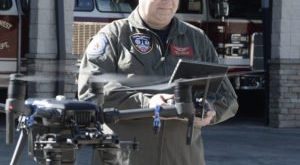

Skydio Parachute for X10: Safety and FAA Part 107 Operations Over People
The Skydio Parachute for X10 is a purpose built safety attachment designed to support compliant flight operations over people and moving vehicles. It adds an independent layer of protection that works alongside Skydio’s autonomous flight, obstacle avoidance, and system health monitoring.
As a result, operators gain additional risk mitigation in environments where people or vehicles cannot be fully excluded from the operational area.
Purpose Built Design for the X10 Platform
The Skydio Parachute integrates directly with the X10 platform using dedicated attachment points and system connections. This design allows the parachute to function without interfering with autonomous flight or mission sensors.
The system continuously monitors defined failure conditions. When those conditions occur, the parachute can deploy automatically. Pilots also retain the ability to manually initiate flight termination when required.
Deployment and Descent Control
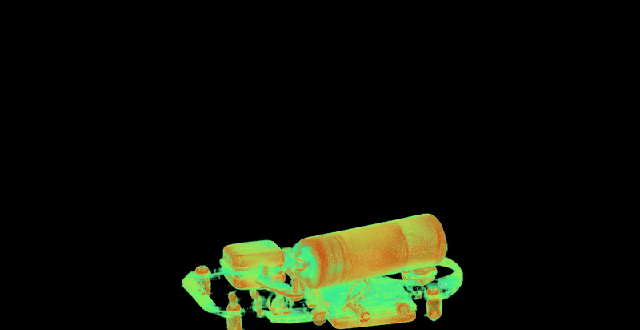

The parachute uses a compressed gas deployment mechanism. This mechanism rapidly opens the canopy to slow descent and reduce impact energy. As a result, the system supports a low minimum deployment altitude of 100 feet above ground level for shielded operations.
Status Indicators and Preflight Checks
Smart status indicators and built in system checks allow pilots to confirm that the parachute is armed and ready before flight. These checks are available whether the aircraft is operated remotely or with a handheld controller.
Dock and Remote Operations Compatibility
The parachute system is compatible with Skydio Dock. This adds an extra layer of safety for dock based Drone as First Responder missions and other remote operations. It also supports hand flown flights.
Although the parachute does not replace responsible flight practices, it provides added protection in environments where restricted or controlled access zones are impractical.
Designed for Safety and Validated Through Testing
Operations over people require a higher level of safety by design. To demonstrate compliance with FAA regulations, Skydio worked with independent third party partners to validate system performance.
Parachute Deployment Testing

An FAA designated test site provided oversight for parachute deployment testing. This testing evaluated deployment performance and descent characteristics under a variety of conditions. The process followed the accepted industry technical standard ASTM F3322 22.
Impact and Injury Severity Testing
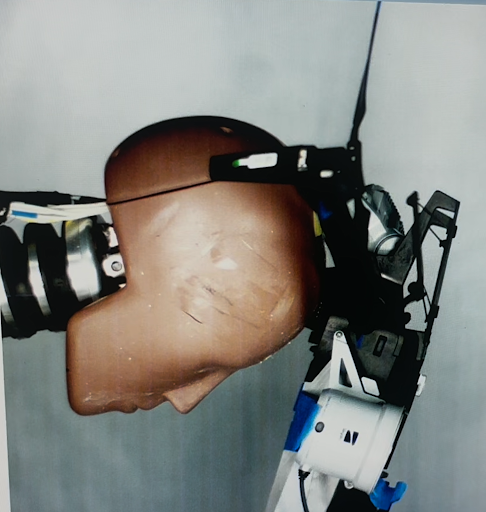
Additional testing evaluated aircraft terminal descent and impact characteristics. These tests verified compliance with kinetic energy limits and injury severity metrics required for Part 107 Category 2 and Category 3 eligibility.
Together, deployment and impact testing confirm that the Skydio Parachute for X10 performs as intended in real world operating environments.

What Part 107 Category 2 and Category 3 Compliance Enables
Restricting flights to closed or restricted access sites is often impractical. With a declaration of compliance, Skydio X10 equipped with the parachute becomes eligible for expanded Part 107 operations.
Category 2 Operations
Category 2 operations generally allow sustained flight over people. This includes open air assemblies and transient flight over moving vehicles when required.
Category 3 Operations
Category 3 operations allow transient flight over people and moving vehicles. However, they do not allow hovering or sustained flight. They also do not allow operations over open air assemblies.
This compliance removes the need to wait for an operations over people waiver. It also satisfies requirements in existing waivers that mandate a third party tested parachute system.

Operating Limits and Environmental Conditions
Operations under Category 2 and Category 3 are subject to defined operating limits.
At sea level, the Skydio Parachute for X10 supports sustained flight over people in winds up to 8.9 miles per hour. It supports transient flight in winds up to 13.4 miles per hour.
The system is rated for operation up to 15,000 feet. At higher altitudes, wind limits are reduced to maintain safety margins.
For additional regulatory details, operators should consult FAA Advisory Circular 107 2A.

Real World Use Cases Where Added Safety Matters
The parachute system delivers the most value in missions where operators cannot fully exclude people or vehicles. For example, it supports:
-
Urban infrastructure inspections over sidewalks and roadways
-
Construction monitoring with active crews below
-
Transportation and traffic analysis over moving vehicles
-
Emergency response operations in populated neighborhoods
In addition, the parachute system helps reduce risk in environments where controlled access zones are difficult to maintain. Even so, operators should still follow responsible flight practices and defined operating limits. In the unlikely event of an in flight failure, the system is designed to reduce descent energy and help protect people on the ground.

What This Means for Public Safety Operators
Public safety teams often operate in time sensitive situations where people are present. Therefore, safety mitigations that support compliance can make a major operational difference.
Under Part 107, the Skydio Parachute for X10 enables agencies to operate over people and moving vehicles without relying on special waivers. Additionally, it satisfies requirements found in public safety focused shielded operation waivers.
For operators flying under Part 91, the system meets requirements outlined in FAA public aircraft waivers for operations over people. As a result, this added safety capability supports mission planning, risk management, and public trust.
Confirming Eligibility on the FAA DOC Website
The FAA maintains a public Declaration of Compliance database listing accepted aircraft and safety accessories. To confirm eligibility, operators can take the following steps:
-
Visit https://uasdoc.faa.gov
-
Next, verify the aircraft make and model
-
Then, enter the parachute serial number to confirm Category 2 and Category 3 eligibility
Where to Find the Parachute System Manual
Safe operation depends on proper system use. For that reason, operators should review the online parachute system manual before flight. Specifically, it includes:
-
Installation and configuration guidance
-
Preflight inspection requirements
-
Operational limits and settings
-
Maintenance and handling information
Finally, operators should follow the stated instructions and remain familiar with operating limits and safety information before conducting flight over people operations.
Enabling Real World Operations Safely
Many of today’s most impactful missions take place near people and vehicles. For these environments, the Skydio Parachute for X10 is purpose built to support safe operations. Overall, it provides a standards based safety mitigation that supports compliant operations without limiting mission effectiveness.